
Connect MES and ERP data across the manufacturing process

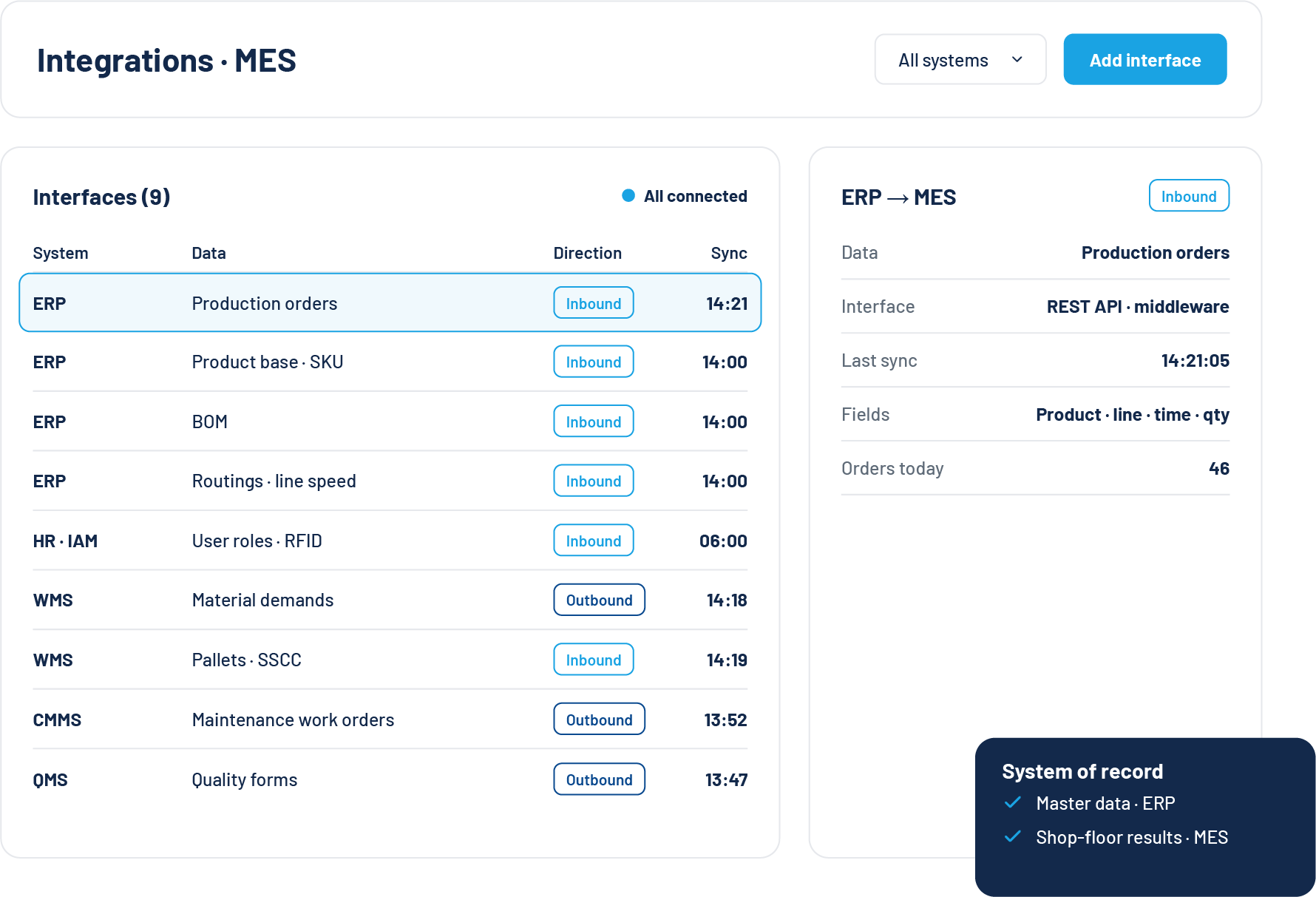
Accevo manufacturing system integration connects MES with ERP, SAP, WMS, APS, CMMS, QMS and other factory systems. It synchronizes master data, production orders and shop-floor results through controlled inbound and outbound interfaces, reducing duplicate reporting and keeping each system responsible for the right data.

Build a reliable MES-ERP integration around factory workflows

Define which system owns each data object, when information moves and how errors are handled. Accevo supports the complete exchange from production preparation to confirmed results.

Receive production data

Send items, BOMs, routings, orders, schedules and dictionaries from ERP or SAP to MES.

Execute on the shop floor

Use synchronized data in operator workflows, production reporting, quality and maintenance processes.

Return confirmed results

Send quantities, defects, timestamps, equipment and operator context back to ERP or another system.

Key benefits of manufacturing system integration

Eliminate double entry

Replace repeated manual reporting in MES and ERP with a controlled data interface.

Keep data consistent

Maintain one owner for each object and synchronize approved changes across connected systems.

Improve traceability

Connect production orders, material definitions and shop-floor results through common identifiers.

Control inbound and outbound MES interfaces

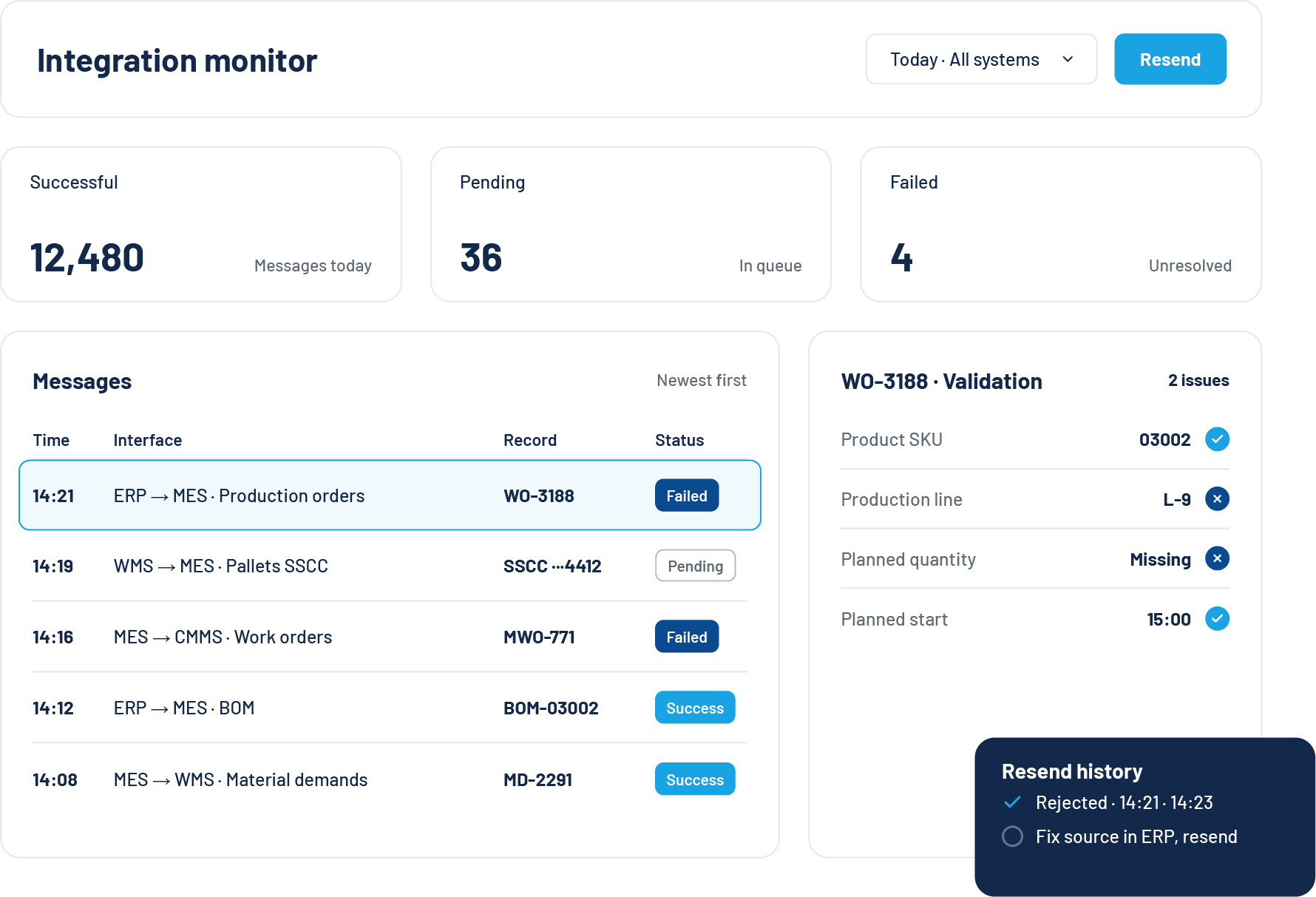
Map the data flow, validate each exchange and keep failed messages visible.

01

Define ownership

Assign each data object to its source system and agree identifiers, formats and update rules.

02

Exchange and validate

Transfer data through the selected interface and check structure, required fields and business rules.

03

Use the data

Make approved master data and orders available to MES workflows without copying them manually.

04

Confirm or resend

Return production results, log interface status and resend failed messages after correction.

Choose an integration method that fits your IT landscape

Accevo supports modern APIs and web services as well as established industrial integration methods. The final design depends on system capabilities, transaction volume, latency and security requirements.

Web services and APIs

Exchange structured data in real time or on an agreed schedule through secured services.

SAP RFC

Connect SAP and MES through Remote Function Call interfaces where RFC fits the customer architecture.

Database and files

Use an intermediate database or controlled XML, CSV and Excel exchange for legacy environments.

Connect MES and ERP data across the manufacturing process

ISA-95 provides a useful boundary between business planning and manufacturing operations. Accevo maps the practical data flows between these layers without forcing every factory into one interface pattern.

Connect MES with ERP, SAP and factory systems

Use a defined integration layer for production, maintenance, warehouse and quality data.

ERP and SAP MES integration

Synchronize master data and production orders, then return confirmed shop-floor results.

CMMS integration

Exchange failure notifications, equipment status and maintenance completion events.

WMS and intralogistics

Share material demand, movement and availability information with warehouse processes.

APS and PLM

Connect schedules, product definitions, revisions, routings and planning context.

QMS and HR

Exchange quality dictionaries, nonconformance context, employees, roles and qualifications.

Interface monitoring

Track message status, errors, timestamps and resends instead of losing failed transactions.

Monitor every integration transaction

Give IT and production teams a shared view of data exchange health and unresolved interface errors.

Plan your MES-ERP integration

Review the systems, owners, data objects, transaction volumes and security constraints involved in your project. Accevo will map the inbound and outbound interfaces and propose an integration approach for SAP, ERP and connected factory systems.

MES-ERP integration - FAQ

Related insights on system integration