

LIMS: Laboratory Information Management System
Accevo LIMS runs controlled laboratory operations end to end - samples, test methods, results, approvals and records in one system - and connects them to the production batch that generated them.
A laboratory information management system built for manufacturers rather than for standalone labs: FDA 21 CFR Part 11 and EU GMP Annex 11 ready, and on the same platform as your MES, EBR and QMS.
What is a LIMS?
A System zarządzania informacjami laboratoryjnymi (LIMS) manages the full lifecycle of laboratory work: registering samples, scheduling and executing tests against approved methods, capturing results, running the approval workflow, and retaining every record in a form an auditor will accept.
What separates a manufacturing LIMS from a general one is context. An out-of-specification result is only actionable if you can immediately see which batch, which line, which shift and which process conditions produced the sample. In a standalone lab system that link is a manual lookup; here it is the data model.
That is the whole argument for putting LIMS on the same platform as production: the lab stops being an island, and a result stops being a verdict you receive and becomes a signal you can trace.
Data integrity and compliance
Laboratory records are the most scrutinised data in a regulated plant. Accevo LIMS is built so the evidence exists by construction rather than being assembled before an inspection.
Regulatory controls
FDA 21 CFR Part 11 – electronic records and electronic signatures with unique user authentication and role-based access.
EU GMP Annex 11 – electronic record controls aligned with EudraLex Volume 4 expectations for computerised systems.
Configurable audit trails – who did what, when, and what changed, with every prior value preserved rather than overwritten.
Result integrity
OOS and OOT handling – out-of-specification and out-of-trend results flagged automatically and routed into a documented investigation rather than a conversation.
Validated calculations – results computed by the system against the approved method, removing the transcription and spreadsheet errors that cause most data-integrity findings.
Retesting and reintegration – controlled, recorded and linked to the original result, so the history of a decision is intact.
Certyfikaty firmy
ISO 9001 – certified quality management across our development, delivery and support processes.
ISO/IEC 27001 – certified information security management, which matters when laboratory data is commercially sensitive.
Validation support – standard documentation packages, requirement traceability and IQ/OQ/PQ execution support for your CSV effort.
21 CFR 11
electronic records & signatures
Annex 11
EU GMP computerised systems
1
data layer for lab and production
Multi-site
one system, many laboratories
LIMS capabilities
Six areas that between them cover the working day of a QC laboratory – from the sampling instruction to the certificate of analysis.
Sample management
Sampling instructions, labels, test schedules and sample logs, with sample work connected to systems such as SAP where the plant requires it. Every sample carries its production context from the moment it is registered.
Specifications & test methods
Version-controlled specifications and methods with approval workflows, sample plans and supplier documentation – so the test that ran is provably the test that was approved.
Results & approval
Manual entry and file import, result validation, calculations, attachments and comments, OOS and OOT investigations, retesting, and dynamic certificate of analysis generation.
Stability studies
Protocols defined with timepoints, conditions, levels and test articles, under the same approval workflow – with the pull schedule managed rather than diarised.
Equipment integration
Instruments connected directly, files parsed, processing rules applied, and calibration status tracked with alerts – removing the manual transcription step entirely.
Electronic Lab Notebook (ELN)
Integrated ELN for method execution, sample preparation and calculations, exchanging data with the LIMS rather than sitting alongside it as a second record.
From sample to release
One workflow, three checkpoints. Each stage is enforced in sequence, so a result cannot be approved before the test it came from was validly executed.
Registration and scheduling
The sample is registered against its batch, line and timepoint, given a label and a test schedule derived from the approved sample plan – not from someone remembering which tests apply.
Execution and result capture
Tests executed against the version-controlled method, with values read from instruments where they are connected and validated against specification as they are entered.
Review, approval and CoA
Review by exception on flagged results, electronic approval with signature, and a certificate of analysis generated from the record rather than typed from it.
One laboratory data layer
The expensive problem in most QC laboratories is not any single system – it is that the sample log, the instrument output, the stability schedule, the investigation file and the certificate all live in different places, and a human being is the integration between them.
A single data layer removes that person from the critical path. The instrument writes to the record, the record drives the approval, the approval produces the certificate, and the batch it all belongs to is attached throughout. Nothing is retyped, so nothing is mistyped.
Connect laboratory and quality workflows
LIMS is most valuable where it stops being a laboratory system and becomes part of the release process.
Elektroniczne zapisy serii (EBR)
Lab results complete the batch record, so release is not waiting on a PDF emailed from the laboratory. See EBR.
System zarządzania jakością
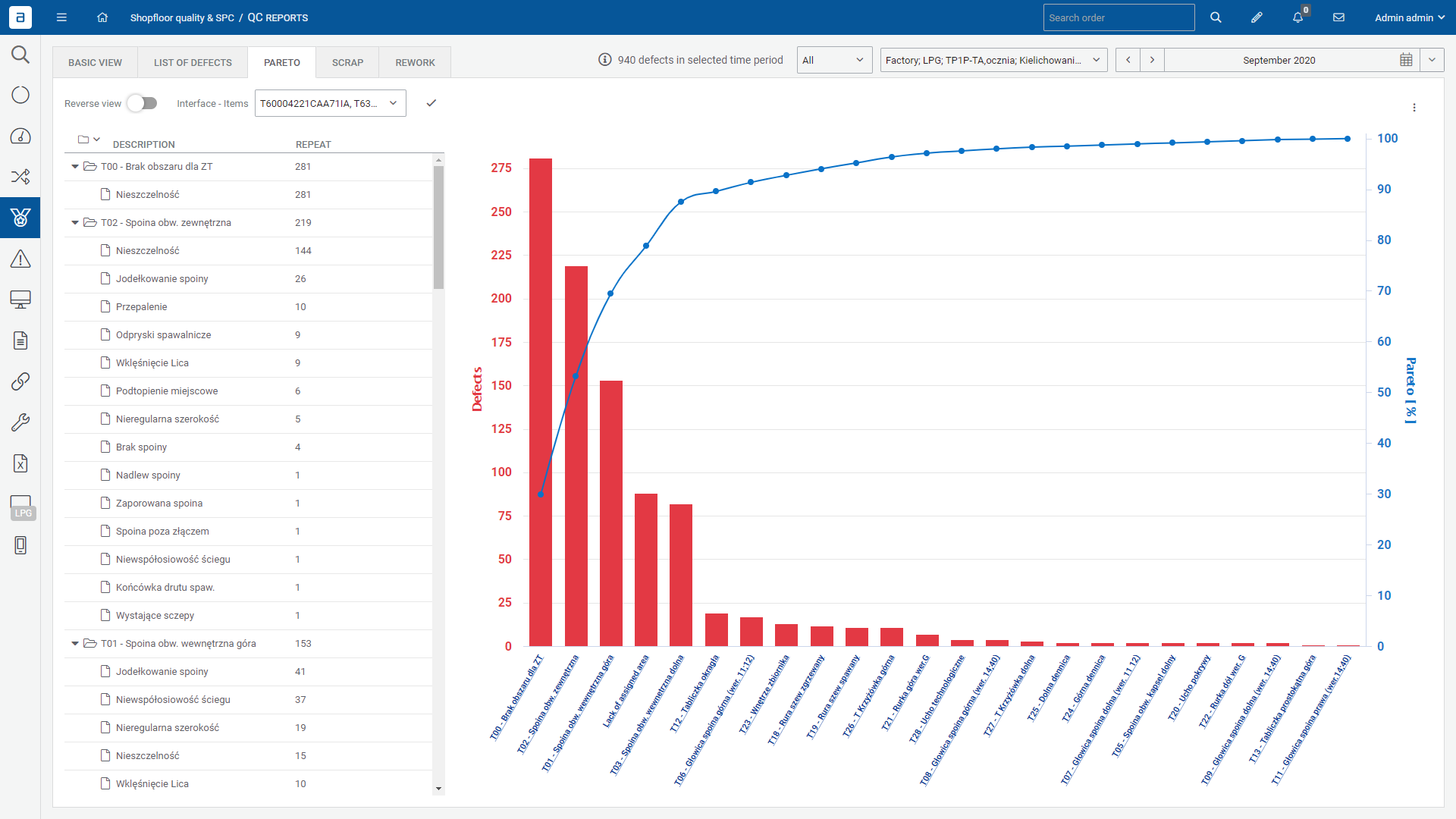
OOS investigations and deviations flow into CAPA handling, and QMS specification limits govern LIMS validation checks. See QMS.
ERP, SAP and document management
Sample work, material master data and document control exchanged with the systems already running the plant, via web services, SAP RFC or file interfaces.
Built for growth
A laboratory system is a fifteen-year decision. These four properties are what determine whether the one you pick is still serving you at the end of it.
Configurable, not custom
New methods, specifications, sample plans and workflows configured rather than developed – which is also what keeps revalidation proportionate when the process changes.
Multi-site by design
Several laboratories on one system with shared master data and site-specific practice, so a second site is a rollout rather than a second implementation.
Cloud, on-premise or hybrid
The deployment model is your decision. Data can be collected at the edge and processed centrally, or kept entirely on your own servers where policy requires it.
Open integration
Documented interfaces to ERP, MES, instruments and document management, so laboratory data is reusable rather than trapped.
Who works in the system
QC Laboratory Manager
Sample backlog, instrument availability, analyst workload and turnaround time visible in one place – and the schedule driven by the approved sample plan rather than by a spreadsheet someone maintains.
Quality Assurance / QP
Review by exception on flagged results, complete audit trails, and the lab data attached to the batch record it belongs to – so release is a review rather than an archaeology exercise.
IT and validation lead
A configurable product with standard validation documentation, requirement traceability and documented change control – which is what keeps the CSV effort proportionate.

Kontakt z naszym ekspertem
Michał Chmiel, Ekspert ds. oprogramowania przemysłowego
- 60-minutowe spotkanie online z dedykowanym specjalistą prezentującym topowy system z branży podobnej do Twojej
- Modelowanie na żywo Twojego procesu produkcyjnego
- Wycena budżetowa po spotkaniu
Najczęściej zadawane pytania
LIMS, explained
A Laboratory Information Management System manages the lifecycle of laboratory work: sample registration, test scheduling and execution against approved methods, result capture and validation, approval workflows, and retention of records in an auditable form. In manufacturing it also links every sample to the batch and line that produced it.
A LIMS manages samples, tests, specifications and results as structured data across the laboratory. An Electronic Lab Notebook records how an individual piece of work was carried out. Accevo includes an integrated ELN that exchanges data with the LIMS, so they are one record rather than two.
Yes. Electronic records and signatures, unique user authentication, role-based access and configurable audit trails are built in, aligned with FDA 21 CFR Part 11 and EU GMP Annex 11. Validation documentation and IQ/OQ/PQ support are part of the project.
OOS and OOT results are flagged automatically against the approved specification at the moment they are entered or imported, and routed into a documented investigation with retesting controlled and recorded. The original result is never overwritten.
Yes. Instruments are connected directly where they support it, with output files parsed and processing rules applied. Calibration status is tracked with alerts. This removes manual transcription, which is the single largest source of laboratory data-integrity findings.
Yes - sample work, material master data and controlled documents are exchanged with ERP (including SAP) and document management systems through web services, RFC or file interfaces.
Yes. Multi-site deployment with shared master data and site-specific practice is a standard configuration, so an additional laboratory is a rollout rather than a fresh implementation.
They are modules of one platform. Laboratory results complete the elektroniczny rejestr partii for release, and investigations flow into QMS for CAPA handling - with no interface to maintain between them.
Najnowsze artykuły

Jak wyeliminować papier podczas montażu foteli lotniczych? Studium przypadku w RECARO
RECARO Aircraft Seating to międzynarodowa firma z siedzibą w Schwaebisch Hall w Niemczech. Specjalizuje się w montażu foteli lotniczych. Aby dowiedzieć się więcej o firmie RECARO, kliknij tutaj. Proces montażu musi być zgodny z rygorystycznymi przepisami, ponieważ dane techniczne i oficjalna dokumentacja całego procesu produkcyjnego są przechowywane w bezpiecznym

Elektroniczny zapis partii - automatyzacja i eliminacja papieru w farmacji
Nie jest tajemnicą, że każdy etap procesu produkcji farmaceutycznej musi być udokumentowany. Jednak zarządzanie dokumentacją papierową może być dla producentów farmaceutycznych niezwykle czasochłonne, a błędy ludzkie zdarzają się stosunkowo często. Z tego powodu firmy farmaceutyczne postanowiły wdrożyć tzw. elektroniczną dokumentację partii (EBR), aby

W jaki sposób system MES eliminuje papier z produkcji i hali produkcyjnej?
Cyfryzacja na stałe zadomowiła się w codziennych procesach produkcyjnych, niezależnie od branży. Niemniej jednak nadal utrzymują się nawyki z czasów sprzed powszechnej cyfryzacji, a tradycyjne rozwiązania nie idą w parze z wydajnością biznesową. Przykładem tego jest papier – nadal jest powszechnie stosowany przy tworzeniu dokumentacji wykorzystywanej na hali produkcyjnej