




AI in manufacturing
From predictive maintenance and quality to a generative AI assistant for your operators: start with clean, real-time production data and add AI capabilities step by step.
AI in manufacturing: an overview
Artificial intelligence in manufacturing means systems that learn from production data to predict, optimize and act – instead of following fixed rules. Machine learning models find patterns in sensor and process data; generative AI and large language models (LLM) create content and answer questions in natural language; computer vision inspects products faster than any human eye.
Manufacturers were slow starters in digital adoption, but AI is now a board-level priority: generative AI manufacturing use cases alone are projected to add $10.5 billion in revenue by 2033. The catch: every AI use case is only as good as the data behind it. That is exactly where an MES with IIoT connectivity comes in – as the Industry 4.0 data backbone of your AI factory.
Accevo AI capabilities
Accevo is an AI MES: machine learning works directly on the production data the platform already collects. These are the capabilities you can switch on without a separate data science project.
Predictive quality
Machine learning models correlate process parameters with quality outcomes, flagging batches at risk before the lab result – so you correct the process, not the product.
预测性维护
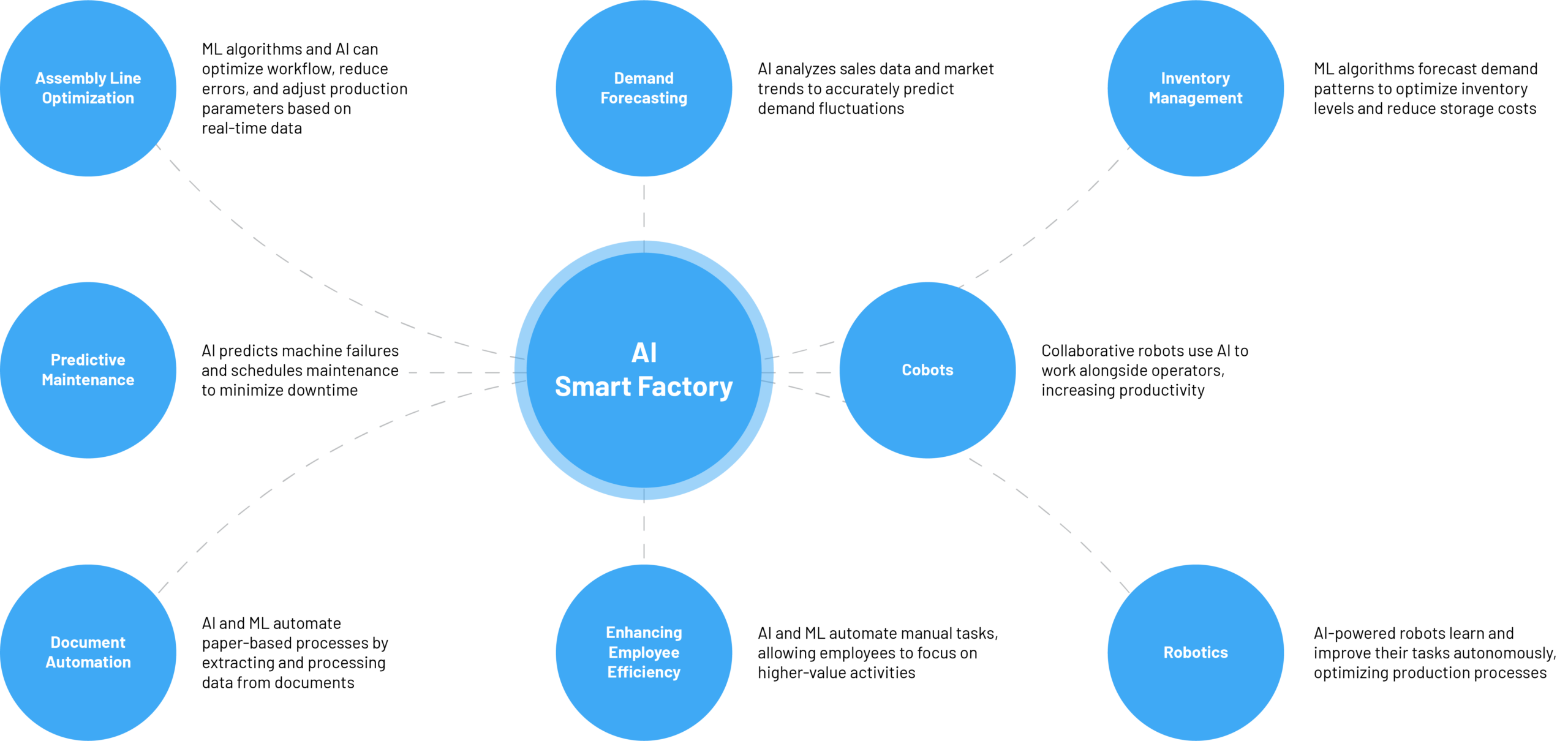
Sensor data from machines feeds ML models that predict failures and suggest optimal maintenance windows, cutting unplanned downtime and spare-part costs.
Anomaly detection
AI-powered analytics watch every parameter in real time and alert on deviations no threshold alarm would catch – drift, oscillation, unusual correlations.
Generative AI assistant
An LLM-based AI assistant answers operators and engineers in natural language: root causes, work instructions, shift summaries – grounded in your own production data.
AI for scheduling & planning
AI production optimization for schedules: demand forecasting and constraint-based re-planning keep lines busy and orders on time, even when reality disrupts the plan.
Computer vision quality control
Camera-based inspection with computer vision models detects surface defects, missing components and label errors at line speed, with every result traced in the MES.
Predictive quality & maintenance in practice
Prediction is the highest-ROI machine learning manufacturing use case, because it converts data you already have into downtime and scrap you avoid. Companies like Pepsi and Colgate already detect machine issues before they become failures – here is how it works with Accevo.
Data from every machine
IIoT connectivity streams vibration, temperature, pressure and process values from legacy and new machines into one platform – the raw material for predictive analytics.
Models that learn your factory
ML models train on your historical failures and quality records, not generic benchmarks. Accuracy grows with every shift as the models see more of your production.
Action inside your workflow
Predictions become maintenance orders in CMMS and quality alerts in MES – routed to the right person with full context, not another dashboard to check.
AI-powered analytics & anomaly detection
Traditional alarms fire when a value crosses a threshold. AI-powered analytics go further: models learn the normal behaviour of each machine and process, then detect anomalies – slow drift, unusual combinations of parameters, micro stops that repeat in patterns. Combined with OEE data, this is AI production optimization in daily use: the system tells you which line is behind target, why, and what to check first. Analysts can push the same data to Power BI, Azure Synapse or Snowflake for custom analysis – a practical step toward a digital twin of your production.
Generative AI on the shop floor: your LLM assistant
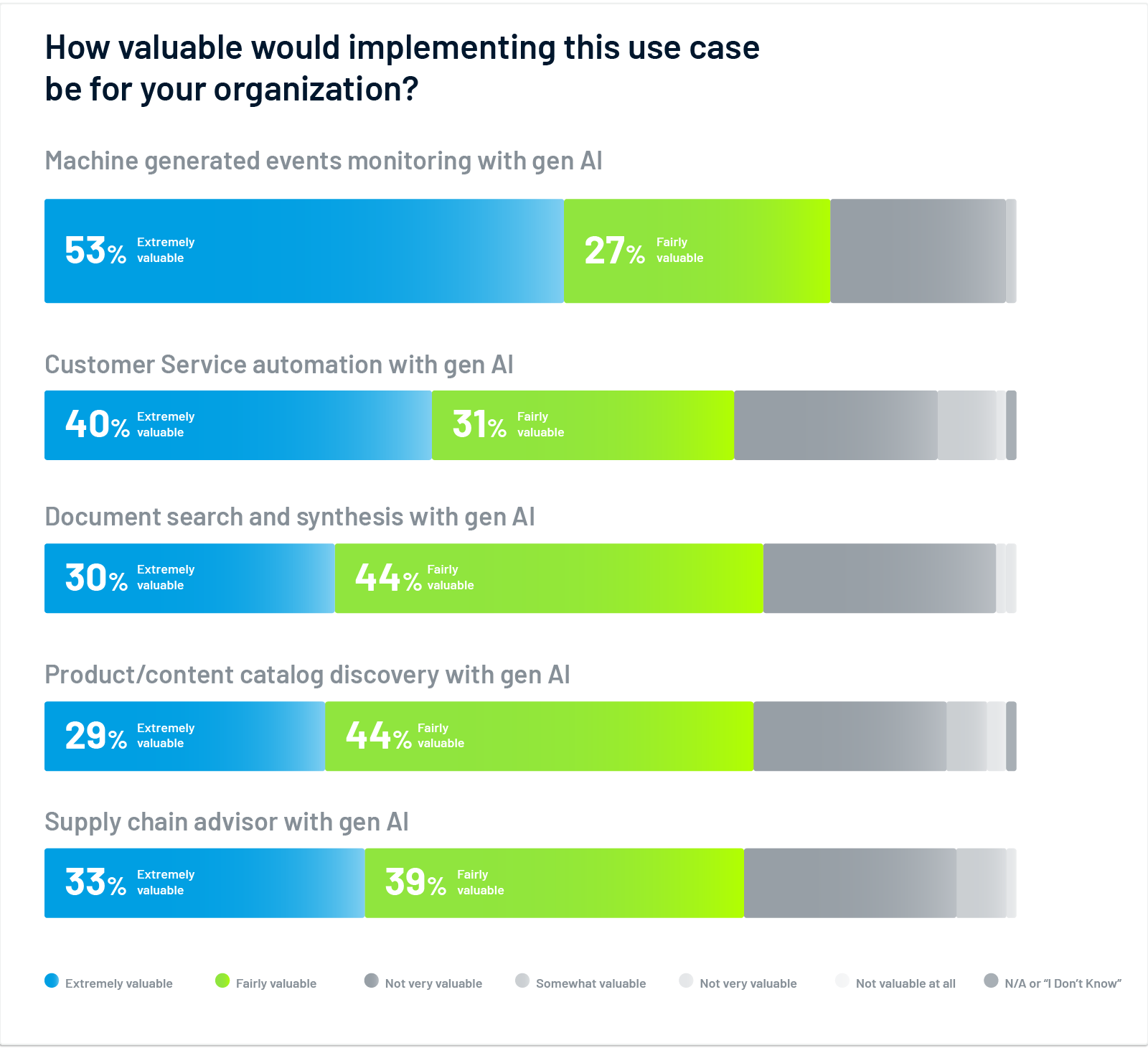
Generative AI manufacturing use cases are moving from pilots to production: Google and McKinsey point to machine-event monitoring, document search and synthesis, faster work instructions and AI-powered customer communication. In Accevo, an AI assistant built on large language models and natural language processing lets operators ask questions in plain words – “why did line 3 stop last night?” – and get answers grounded in real production data, with sources. New employees ramp up faster, experts stop being the bottleneck.
AI for scheduling & planning
Planning is where small percentage gains compound into big numbers. AI supports every planning horizon – from next quarter’s demand to the next changeover on line 2.
Demand forecasting
ML models analyze historical sales, seasonality and external signals to predict demand more accurately – so production plans start from better numbers and inventory stays lean.
Constraint-based scheduling
Advanced planning and scheduling (APS) uses algorithms to sequence orders against real constraints: machines, tools, skills and materials – not a spreadsheet’s wishful thinking.
Dynamic re-planning
When a machine stops or an order changes, AI re-plans in minutes instead of a planner’s afternoon – keeping delivery promises realistic and lines utilized.
Data requirements: be ready before you implement AI
AI and ML systems are only as good as the data they read – and they struggle with unstructured, scattered data. Data quality is the number one challenge in AI adoption, so leading manufacturers invest in the data foundation first. This is Accevo’s home turf.
Data acquisition
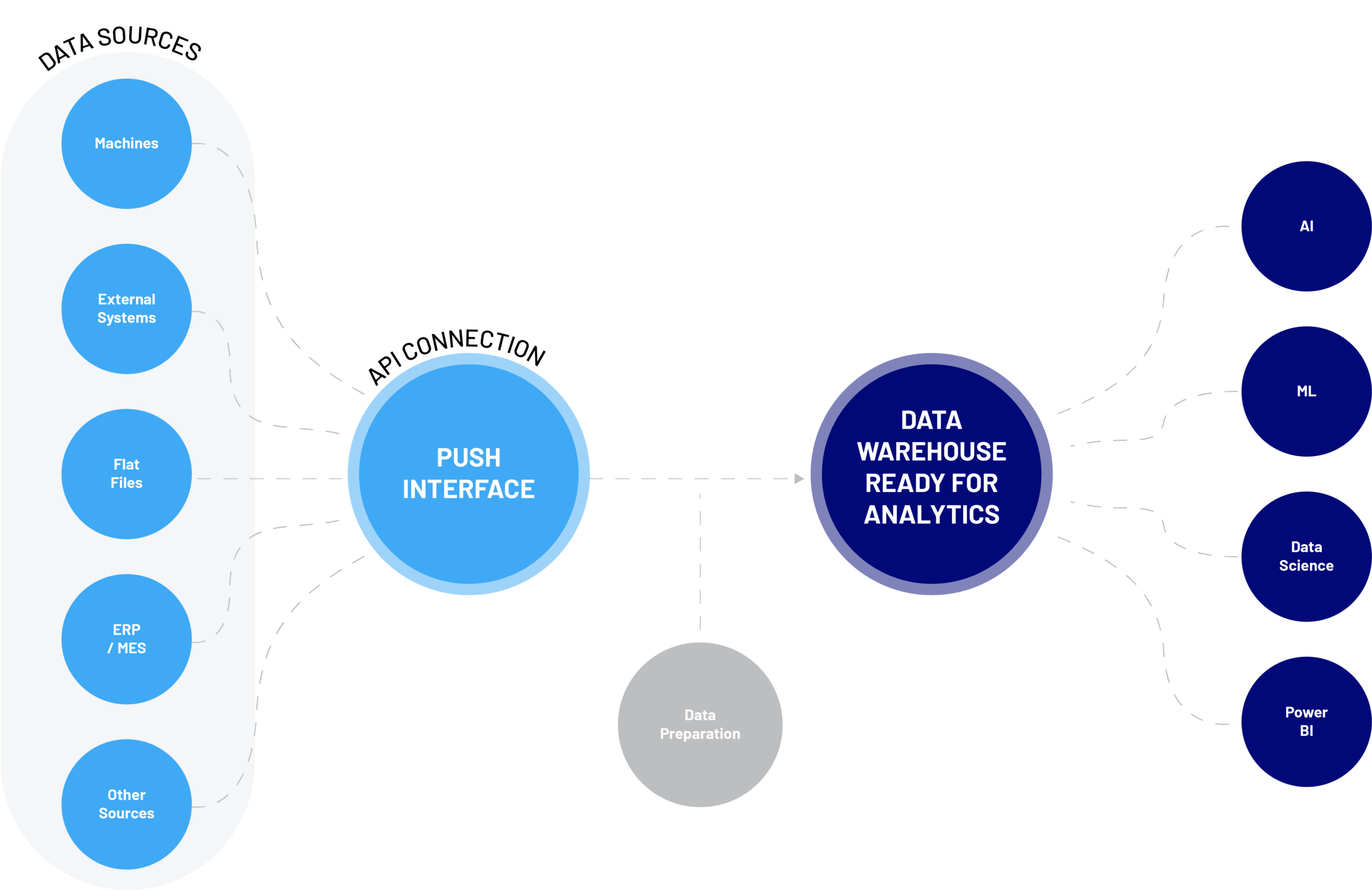
Factory data lives in machines, sensors, ERP, PLM and quality systems. Accevo connects them through IIoT gateways and standard integration methods (ETL, ELT, CDC) into one comprehensive view of operations.
Data preparation
Raw shop-floor data is cleaned, standardised, deduplicated and enriched with production context – batch, order, machine, operator – so machine learning algorithms can actually use it.
Data warehousing
Structured production data flows into a data lake and warehouse – cloud platforms like Snowflake or Azure Synapse – creating the central repository your AI tools train on and query.
Push interface to AI services
Accevo’s push interface actively streams real-time production data to selected AI services, instead of waiting for requests. Your AI models always work on live data – the difference between a report and a prediction.
The ROI of AI in manufacturing
AI investments pay back where they touch physical production: less downtime, less scrap, faster answers. Numbers from the industry and from Accevo customers:
$10.5B
projected added revenue from GenAI in manufacturing by 2033
15%
productivity gain after production digitalization at Alkaloid
5%
typical OEE improvement from removing micro stops and waste
24/7
AI-powered monitoring of every connected machine
Your AI factory roadmap
You do not implement AI in one step – you grow into it. Each stage delivers value on its own and prepares the data foundation for the next one.
1. Connect & collect
IIoT machine connectivity and MES capture clean, contextualized production data – the non-negotiable foundation of every AI use case.
2. Analyze & predict
Predictive analytics, anomaly detection and predictive maintenance turn historical and live data into warnings before problems happen.
3. Assist & generate
Generative AI and LLM assistants put every answer within reach of every operator – work instructions, root causes, shift summaries on demand.
4. Optimize autonomously
Digital twins and closed-loop optimization let AI simulate scenarios and adjust schedules and parameters – with your team approving, not typing.
常见问题解答
AI in manufacturing, explained
AI in manufacturing means using systems that learn from production data to predict, optimize and act - rather than following fixed programmed rules. Typical applications include predictive maintenance, predictive quality, anomaly detection, computer vision inspection, AI-supported scheduling and generative AI assistants for operators.
AI is the broad concept of systems performing tasks that normally require human intelligence. Machine learning (ML) is a subset of AI: algorithms that learn from data and improve with feedback. Generative AI is a specialized branch that creates new content - text, images, instructions - using large language models (LLM) and deep learning.
Clean, contextualized, real-time production data: machine and sensor signals (IIoT), process parameters, quality records, and order data from ERP. Most AI projects fail on data quality, which is why the recommended first step is an MES and data platform that collects and prepares this data automatically.
An AI MES is a manufacturing execution system with machine learning built into its workflows: predictions, anomaly alerts and AI assistant answers appear inside the tools operators and engineers already use - not in a separate data science environment.
Not to start. Platform-embedded AI capabilities like predictive maintenance, anomaly detection and the LLM assistant work out of the box on your production data. Data science teams add value later, for custom models on top of the prepared data in your warehouse.
The fastest returns come from downtime and quality: predictive maintenance cuts unplanned stops, predictive quality reduces scrap, and AI-driven micro-stop analysis typically improves OEE by several percent. Industry projections put GenAI's added revenue in manufacturing at $10.5 billion by 2033.
Legacy machines can be connected with IIoT gateways, sensors and edge devices - no machine replacement needed. Once data flows, every AI capability described on this page becomes available for those lines too.
近期文章

OEE:在运营中发现 "红旗",升起 "绿旗
Overall Equipment Effectiveness (OEE) has become a fundamental metric in manufacturing, providing insights into how efficiently equipment and processes operate. But like any powerful tool, if misunderstood or misapplied, OEE can lead operations astray. This guide will highlight the red flags—common pitfalls manufacturers often encounter—and the green flags—proven strategies to

智能制造:简单易懂
At the forefront of the fourth industrial revolution, smart manufacturing stands as a pinnacle of progress, representing the highest point of tech advancements in the making of goods. This new way of manufacturing is a sharp turn from traditional manufacturing processes that typically require a lot of hands-on work and

制造业中的人工智能现状
Generative AI models play a crucial role in the manufacturing industry software solutions, such as MES (Manufacturing Execution System). These models are capable of simulating various production scenarios, predicting demand, and optimising inventory levels. By utilising historical customer data, generative AI can accurately predict demand, enabling manufacturers to create more


