

Software For Industry 4.0
Industry 4.0 software turns the fourth industrial revolution from a conference topic into a number on a screen. Accevo connects your machines, structures what they produce, and gives every level of the plant the same live picture – one platform instead of nine disconnected tools.
A one-stop solution for your factory: OEE and microstops, MES and MOM, paperless documentation, quality, maintenance, planning and energy – all on one data model, added in whatever order suits you.


What is Industry 4.0, and why does it matter?
Industry 4.0 is the fourth industrial revolution, characterised by the convergence of digital and physical technologies in manufacturing. Steam mechanised production, electricity made it mass production, computers automated it – and Industry 4.0 connects it, so that machines, systems and people work from the same data in real time.
The part that matters commercially is narrower than the term suggests. You do not need a digital twin or an autonomous factory to benefit. You need to know what every machine is actually doing, why it stopped, and whether last month’s change worked. Almost every credible Industry 4.0 business case starts there and expands outwards.
That is what Industry 4.0 software is for: acquiring machine data automatically, giving it production context, and putting it in front of the person who can act on it while they still can. Everything else – AI, predictive maintenance, digital twins – is built on top of that layer, and does not work without it.
The three things Industry 4.0 solutions actually have to do
Strip away the vocabulary and every serious Industry 4.0 platform is doing the same three jobs. A tool that only does one of them creates work rather than removing it.
1. Connect
Machine data acquisition – read states, counters, cycle times and process values straight from the controller rather than from a clipboard.
New machines and old – OPC UA and modern PLCs where they exist; converters, gateways and I/O modules where they do not. Any machine on the market.
The whole floor – operator panels, scales, printers, scanners, test rigs and shop-floor screens on one network, not five islands.
2. Understand
Context, not just numbers – every event tied to an order, product, shift and crew, which is what makes two lines genuinely comparable.
Analytics and reporting – OEE, loss trees, Pareto ranking and ready-made reports, plus a feed into your own data warehouse and BI stack.
AI on clean data – pattern detection and root-cause analysis are only as good as the data underneath. AI in manufacturing.
3. Act
Execution on the floor – orders dispatched to stations, operators guided step by step, results captured as the work happens.
Alerts while it still matters – Andon calls and automatic notifications the moment a line drops below threshold, not at shift handover.
Standards that stick – digital work instructions and paperless documentation, so an improvement reaches every shift the day it is approved.
Industry 4.0 as a slide deck vs Industry 4.0 you can measure
Most Industry 4.0 programmes begin with a strategy document listing eleven technologies and end with a pilot on one line that nobody scaled. The failure is rarely technical. It is that the programme was never tied to a loss anyone could put a number on.
The version that works is smaller and duller: connect the bottleneck line, measure what it is really losing, remove one loss, prove it in the numbers, then extend. Every step funds the next, and the business case writes itself as you go.
The programme that stalls:
- Starts from a technology list rather than from a measured loss
- Pilot on one line, impressive demo, no path to the second line
- Data collected manually "for now" - and therefore never trusted
- Benefits claimed in a steering committee, never visible in the P&L
The programme that compounds:
- Starts by connecting machines on the line that hurts most
- One loss removed and re-measured before anything else is bought
- Data read from the PLC, so nobody argues about the baseline
- Modules added against demonstrated payback, on the same platform
~10%
OEE gain once machines are connected
Typical on lines where microstops and changeover losses become visible for the first time.
5 s
shortest microstop detected automatically
Detected automatically from PLC signals – the losses no manual log ever captures.
-30%
less time spent on manual reporting
Automatic reporting and ERP integration remove the duplicate data entry entirely.
~6 wks
to a first working deployment on one line
Connectivity and dashboards in days; a full execution deployment on one line in weeks.
The different types of software for Industry 4.0
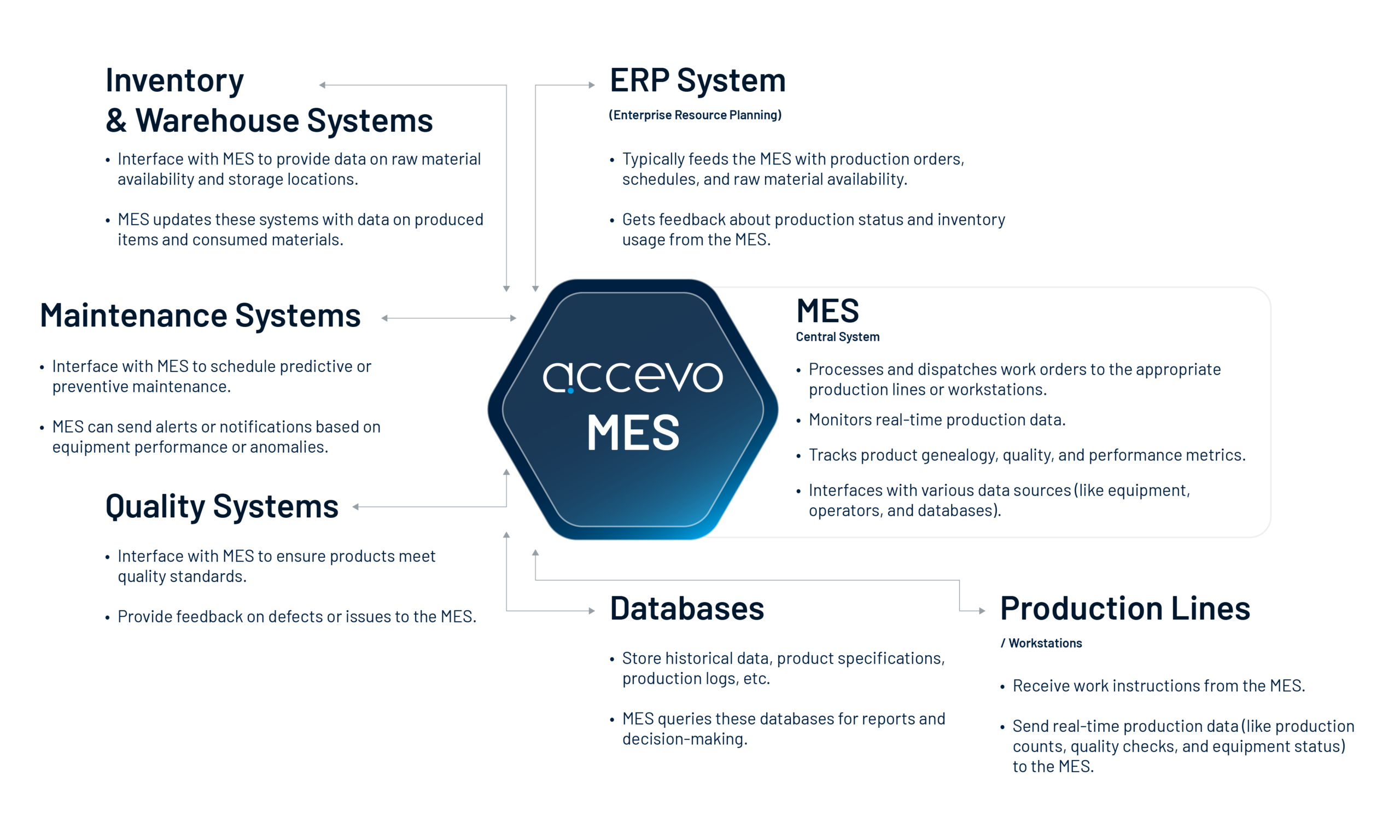
Industry 4.0 is not one product. These are the categories that actually appear in a manufacturing plant, in roughly the order most factories adopt them – and all of them run on the one Accevo Smart Factory platform, so a module added in year three uses the machine connection made in year one.
Live Availability, Performance and Quality from machine signals, with microstops detected automatically and losses ranked by cost. The usual entry point and the fastest payback.
Order dispatching, operator guidance, material validation, traceability and production reporting back to ERP. The layer between your business systems and your machines.
Production, quality, maintenance and inventory operations managed as one domain rather than as four systems that disagree with each other.
Digital work instructions, forms and checklists at the operator panel, plus electronic batch records where the regulator requires them.
In-process inspections with immediate verdicts, statistical process control, lab data and structured defect handling tied back to the machine and batch.
Maintenance management, advanced planning and scheduling, and energy monitoring – each genuinely useful once the machine data exists, and guesswork without it.
Machine connectivity: the part everyone underestimates
Every Industry 4.0 project rests on one question – can you actually read the machines you already own? Not the new line commissioned last year, but the press from 1998 with no documentation and no spare ethernet port. This is where schedules slip, and it is the reason we employ our own automation engineers rather than a partner network.
Communication with new and old machines
OPC UA, OPC DA and MQTT where the equipment supports them; direct drivers for Siemens S7 and S5, Allen-Bradley, Mitsubishi, Omron, B&R, GE Fanuc and Modbus; I/O modules wired to existing signals where a controller gives no access at all.
Our own engineers, our own hardware
Protocol analysis, edge device and field server installation, wiring, gateways and signal validation – delivered by Accevo rather than subcontracted, so one team is accountable from the PLC terminal to the dashboard.
Data that survives the network
Collection at the edge with local buffering through connection loss, then timestamped synchronisation when the link returns. Connection health is monitored per source, so a gap is visible rather than silent.


Sign up to our newsletter
Systems integration: Industry 4.0 does not replace what you have
Nobody is throwing out their ERP. The value of Industry 4.0 software comes precisely from sitting between the systems you already run and the machines they have never been able to see.
ERP and business systems
Shop-floor devices
Operator panels, TV screens, tablets, barcode printers and scanners, scales and checkweighers, all sharing the same production context rather than each keeping its own version.
Data warehouse, BI and AI
A clean copy of production data delivered into Snowflake or your own warehouse for Power BI, Dataiku and group-level analysis – one definition of a stop, every plant.

How to choose the right Industry 4.0 software for your business
The demo is not the hard part – every vendor demos well. These four criteria are the ones that separate platforms still in daily use after three years from the ones quietly abandoned after the pilot.
Cloud, on-premise or hybrid support
The deployment model should be your decision, not a constraint of the product. Edge collection with central processing on Azure, AWS, Google Cloud or your own servers. Cloud manufacturing.
Dashboards operators will actually use
If the shop floor finds the interface slower than paper, the data stops being accurate within a month. Judge the operator panel, not the management dashboard.
A modern, maintainable stack
Modern languages, containerised deployment and automated updates – so the system you buy this year is still supportable in seven, and adding a module is configuration rather than a project.
Mobile and multi-device access
Tablets on the floor, large screens above the line, phones for alerts and browsers in the office – the same data reaching whoever needs to act on it, wherever they are.
Where to start, and what comes next
1
Connect and measure
Machine connectivity plus OEE and microstop monitoring on one bottleneck line. Cheapest step, fastest payback, and a prerequisite for everything after it.
2
Shortest microstop detected automatically
MES for order execution, material validation and traceability, plus paperless documentation so the improved method reaches every shift.
3
Less time spent on manual reporting
Planning, maintenance, quality and energy modules on the same data – and only then the AI layer, which needs all of it to be worth anything.
Industry 4.0 software in production

Biscuits factory - OEE monitoring
OEE monitoring deployed across the production lines to expose where output was really being lost, giving the plant a trusted KPI baseline and a ranked list of the losses worth attacking first.
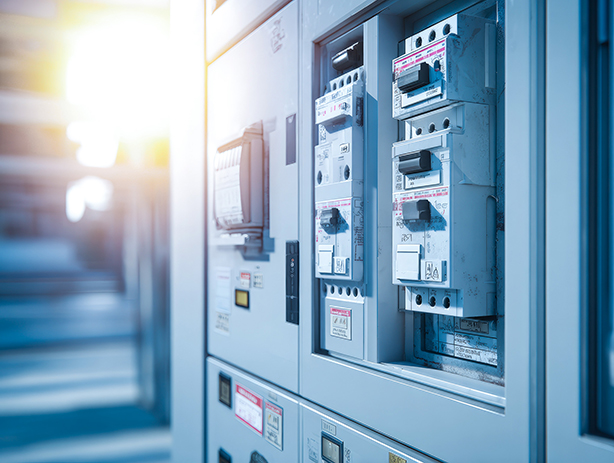
Meters factory - MES
A full MES deployment with real-time monitoring, in-process quality inspections and production reporting, replacing manual records and delivering measurable efficiency gains.
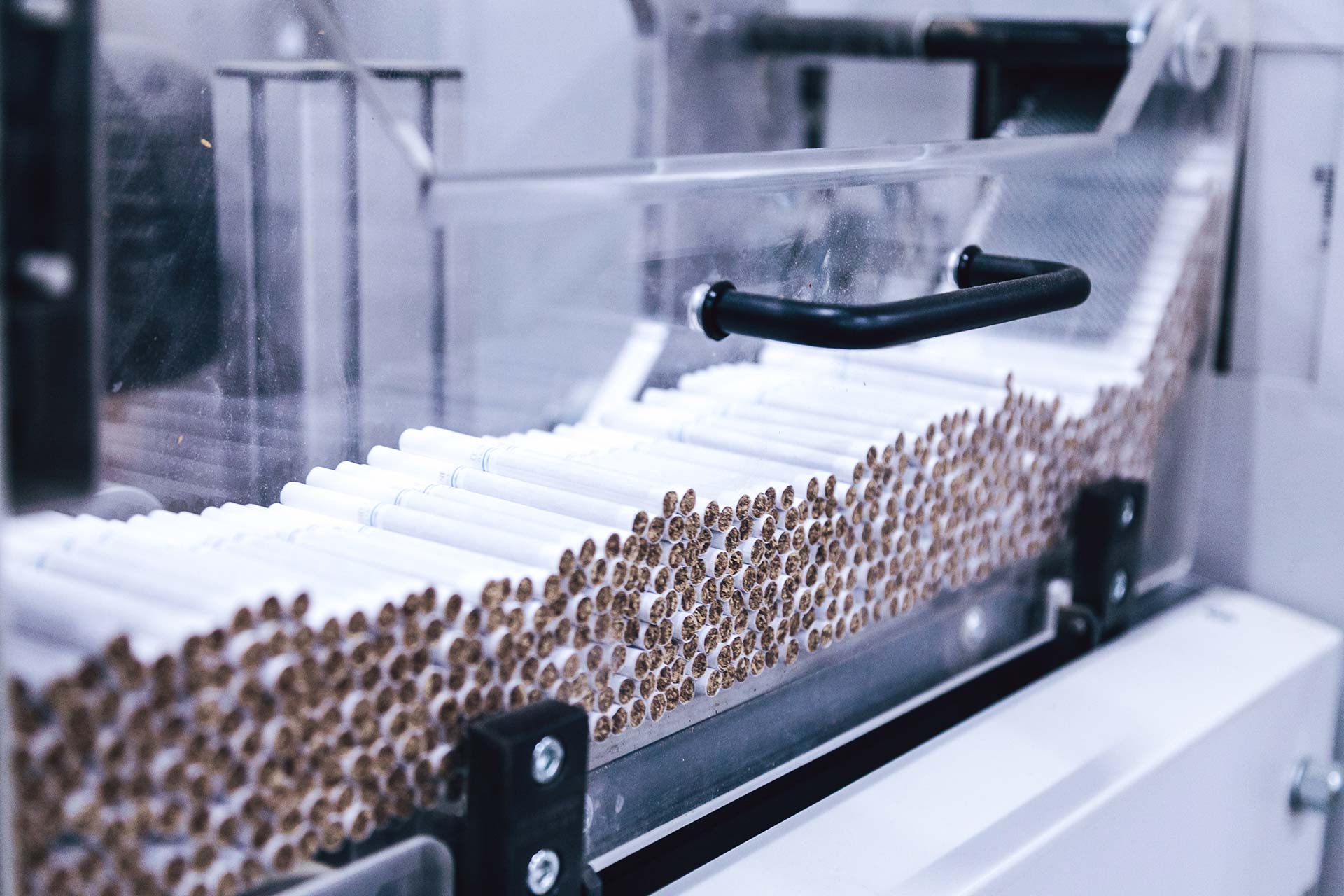
Tobacco group - microstops at scale
Microstop monitoring rolled out across 30 factories and more than 100 machine types – the case that proves both the connectivity claim and the multi-site rollout model.
Start with the line that hurts most
Bring us one bottleneck line: the machines, the controllers, the losses you suspect and the systems you already run. We will tell you which signals we can read today, what that gives you in the first fortnight, and what it would cost to find out.
If you are mapping the wider programme rather than one line, our digital transformation page covers the roadmap, the timeline and the reasons these projects fail.
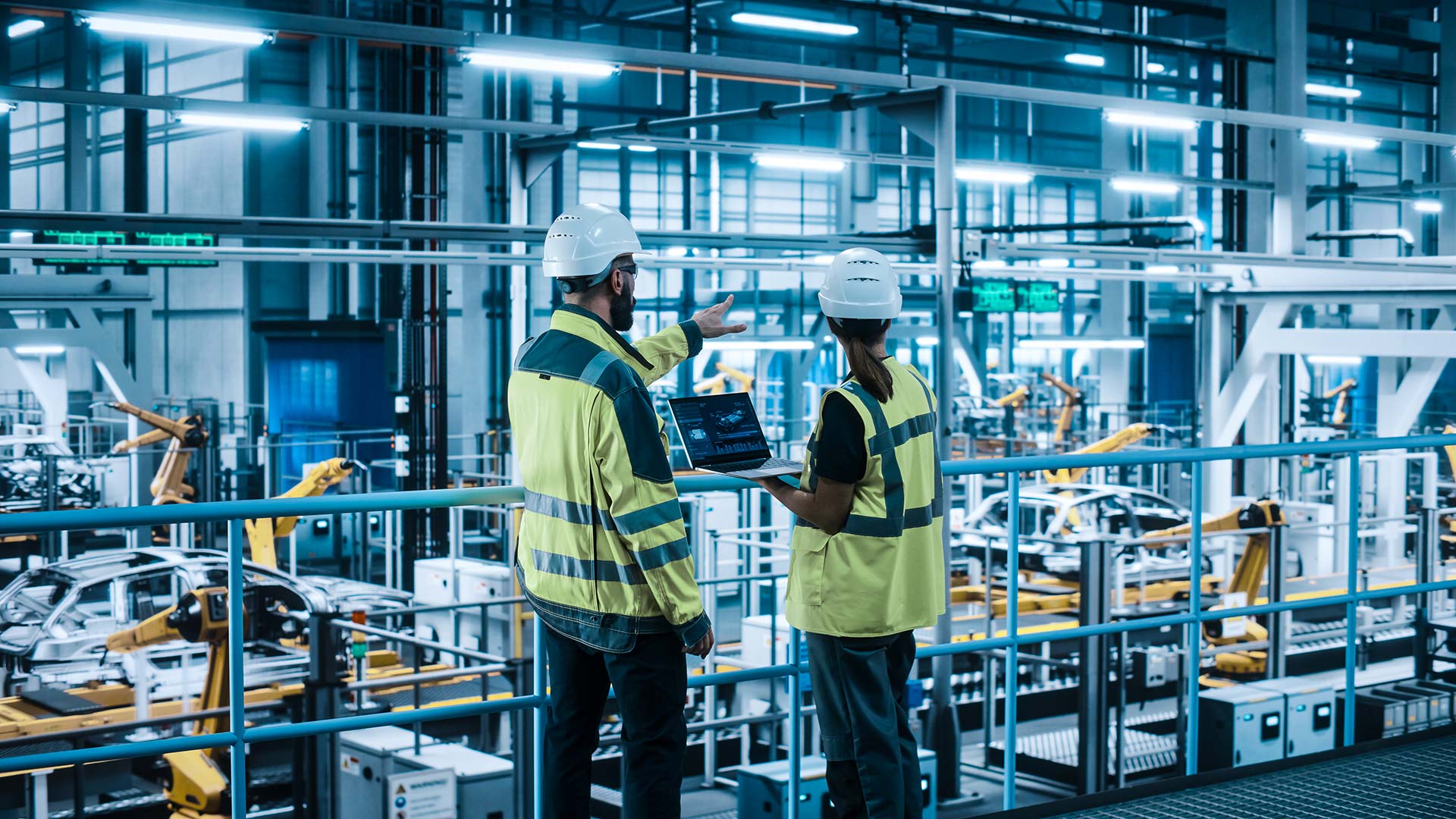

Contact with our Expert
Sebastian Perz, Industrial Software Expert
- A 60-minute online meeting with a dedicated specialist presenting a top system from an industry similar to yours
- Live modeling of your production process
- A budget quotation after the meeting
Frequently Asked Questions
Industry 4.0 software, explained
Industry 4.0 is the fourth industrial revolution: the convergence of digital and physical technologies in manufacturing, where machines, systems and people work from the same data in real time. In practice it means connected equipment, automatic data acquisition and decisions made during the shift rather than after it.
Industry 4.0 software acquires data directly from machines, gives it production context, and makes it usable for execution, quality, maintenance and analysis. It covers OEE and microstop monitoring, MES and MOM, paperless documentation, quality systems, maintenance, planning and energy management.
With machine connectivity and OEE on one bottleneck line. It is the cheapest step, has the fastest payback, and produces the data every other module depends on. Programmes that begin with a technology list rather than a measured loss are the ones that stall.
Neither. Industry 4.0 software sits between them. Accevo integrates bidirectionally with SAP, Microsoft, Infor and Oracle, and connects machines of any age - including equipment with no modern protocol, via converters, gateways or I/O modules.
Industry 4.0 is the broader industrial shift; a smart factory is what it looks like inside one plant - connected machines, live visibility, automated data flow and systems that act on it. Smart factory software is the practical, plant-level subset of Industry 4.0 solutions.
Machine connectivity and live dashboards typically run within days on standard PLC protocols. A first working deployment on one line is usually 2-8 weeks depending on complexity and integration scope. Whole-plant-in-one-phase programmes are the ones that overrun.
Usually yes, and usually sooner than expected - because the first gains come from microstops and changeover losses that are invisible today and need no capital investment to fix. Start with one line and let the measured result decide whether to continue.