

A pharma MES implementation roadmap works best when it starts with one production problem, one well-defined process and clear ownership of the records the system creates. A plant can then prove the workflow on a pilot line before it expands to more products, equipment or sites.

1. Choose the process before choosing the pilot site
List the production steps where operators, quality staff and systems exchange information. Examples include material dispensing, equipment setup, in-process checks, batch execution, packaging and record review. Mark where people re-enter data, wait for approvals, reconcile paper records or search for batch history.
Choose a pilot with a clear owner and measurable baseline. A useful pilot might cover one product family, one packaging line or a sequence of unit operations with frequent hand-offs. Avoid a process that is changing its procedures, product mix and equipment at the same time. That makes it harder to tell whether the MES improved the work.
2. Define the execution boundary and source of truth
Decide which actions the MES will guide, record or verify. Write down the starting event and finishing event for each operation. Then assign ownership for master data, recipes, material status, equipment state, production orders, electronic signatures and batch records.
Map the systems that supply or receive those records. A common architecture connects ERP order and material data, automation or SCADA events, laboratory results from LIMS, and quality decisions from a QMS. Define what happens when an interface is unavailable, a value arrives late or an operator finds a mismatch. Keep the rules specific to your site and quality system.
For a broader system-role comparison, see MES vs SCADA and MES vs ERP integration.
3. Build requirements from real production work
Walk the line with operators, supervisors, engineering, IT and quality. Use current batch records and procedures to map each step. For every step, specify the required input, the person or system that provides it, the expected range, the exception path and the evidence the plant must retain.
Include practical details: equipment selection, line clearance, material verification, scale or instrument values, comments, rework, hold decisions and shift handover. Check whether the process needs electronic signatures, audit trails, role-based access or controlled recipe changes. The European Commission’s EudraLex Volume 4 lists Annex 11 for computerised systems and Annex 15 for qualification and validation. The site quality unit should decide how those requirements apply to the intended use and local procedures.
4. Prepare master data and interfaces before configuration
Review product, material, equipment, recipe and user data before loading it into the MES. Resolve duplicate codes, inconsistent units, obsolete instructions and missing equipment identifiers. Decide who approves each change and how the plant will test a revision.
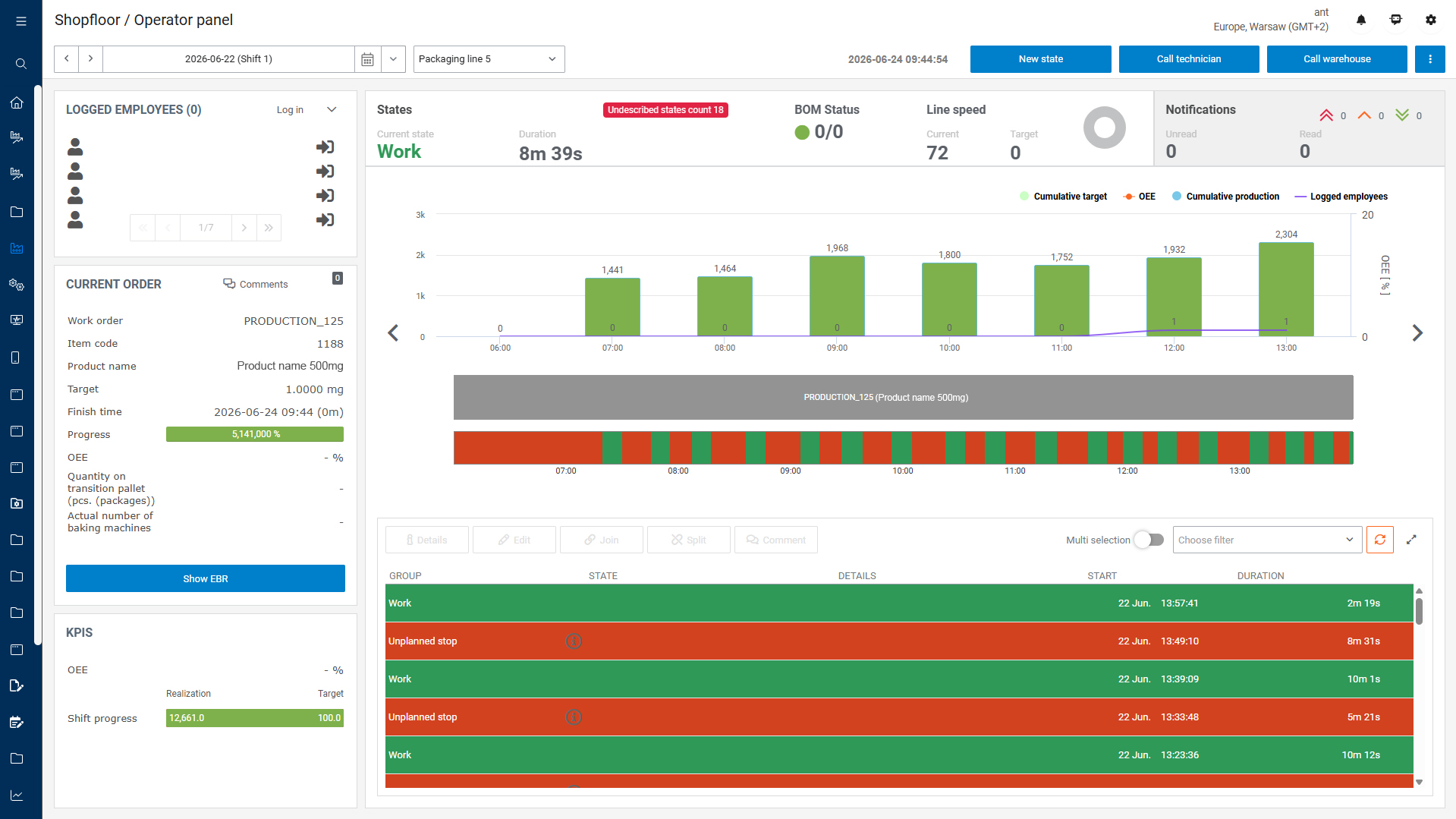
For every interface, define the message, timing, error handling and reconciliation method. Test normal transactions and failures. For example, confirm what the operator sees when an order has no released material, when LIMS returns a result after the next step is due, or when an equipment signal stops arriving.
5. Use a controlled pilot to test the whole workflow
Configure the pilot around the approved process map. Test user roles, records, exceptions, reports, interfaces, backup and recovery in the environment your team uses for qualification. Ask operators to perform normal work and realistic exception scenarios. Ask quality reviewers to follow the record from execution through review.
Agree on acceptance measures before the pilot starts. Track completion time, manual transcription, missing data, exception handling, record-review effort and the effort required to reconcile systems. Set targets from your baseline and quality needs; a vendor benchmark may not match your site.
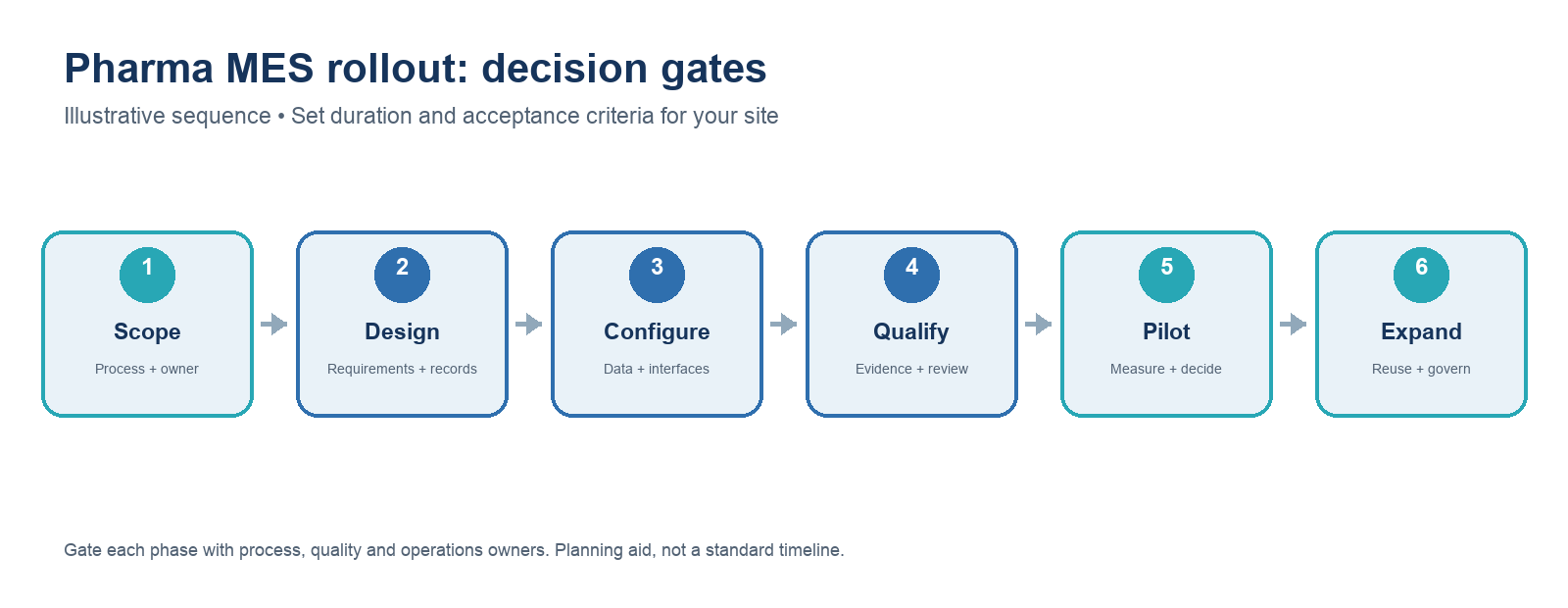
Use a written decision gate to record whether the pilot meets the requirements, which deviations need correction and who approves the next step. The graph below shows a planning sequence, not a standard project duration.
6. Expand by process family, not by copy-and-paste
After the pilot, compare procedures, equipment, product variants and local requirements before reusing a workflow at another line or site. Reuse approved building blocks where they fit. Keep site-specific differences visible and controlled.
Train by role and task. Give operators time to practice exception paths, not only the standard run. Prepare support ownership for recipe changes, access requests, interface incidents and periodic review. Update controlled procedures and training records alongside the system rollout.
Common reasons pharma MES projects stall
- The team automates an unstable process before roles and procedures agree.
- Master data problems surface during configuration instead of during planning.
- Interfaces move values without defining who resolves errors or late data.
- The pilot measures software delivery but not operator work or batch review.
- Project teams copy workflows across sites without checking local processes.
Pharma MES implementation checklist
- Name the process owner, system owner and quality approver.
- Set the pilot boundary and record the current baseline.
- Map the records, interfaces, exceptions and access roles.
- Review master data and assign change control.
- Test normal execution, exceptions, recovery and record review.
- Use agreed acceptance measures before approving expansion.
Accevo’s pharma manufacturing software page describes its pharma offering. You can also review the MES product page and electronic batch records product page.
Questions teams ask during a pharma MES project
How long does a pharma MES implementation take?
Project duration depends on the number of processes, equipment connections, products, sites and qualification activities. Estimate each phase from your approved scope, data readiness and interface complexity. Ask the project team to show assumptions, dependencies and decision gates in the schedule.
Should the MES pilot cover a full site?
A focused pilot gives the team a manageable place to test execution, records and exception handling. Choose a process that represents the problem you want to solve, then use the pilot evidence to decide what the next rollout should include.
Does an MES replace ERP in a pharma plant?
ERP and MES usually support different operating needs. ERP often manages orders, inventory and business planning; MES coordinates production execution and records. Define the boundary and data ownership for your architecture before you configure interfaces.
Make each rollout decision traceable
Keep the scope, requirements, test evidence, deviations, approvals and measures together for each phase. When the team proposes a broader rollout, compare the evidence with the original acceptance criteria. That gives operations, IT and quality a clear basis for approving the next process or site.
