

A production line rarely loses output for one simple reason. A recurring short stop, a slow changeover, a quality hold or a delay at one machine can affect the rest of the line. Teams often see the final output figure before they see the pattern behind it.
Un AI line optimizer uses production data to help teams find patterns and decide where to focus. It can bring machine events, order progress and performance measures into a clearer view. The useful outcome is a better-informed improvement decision that people can investigate.
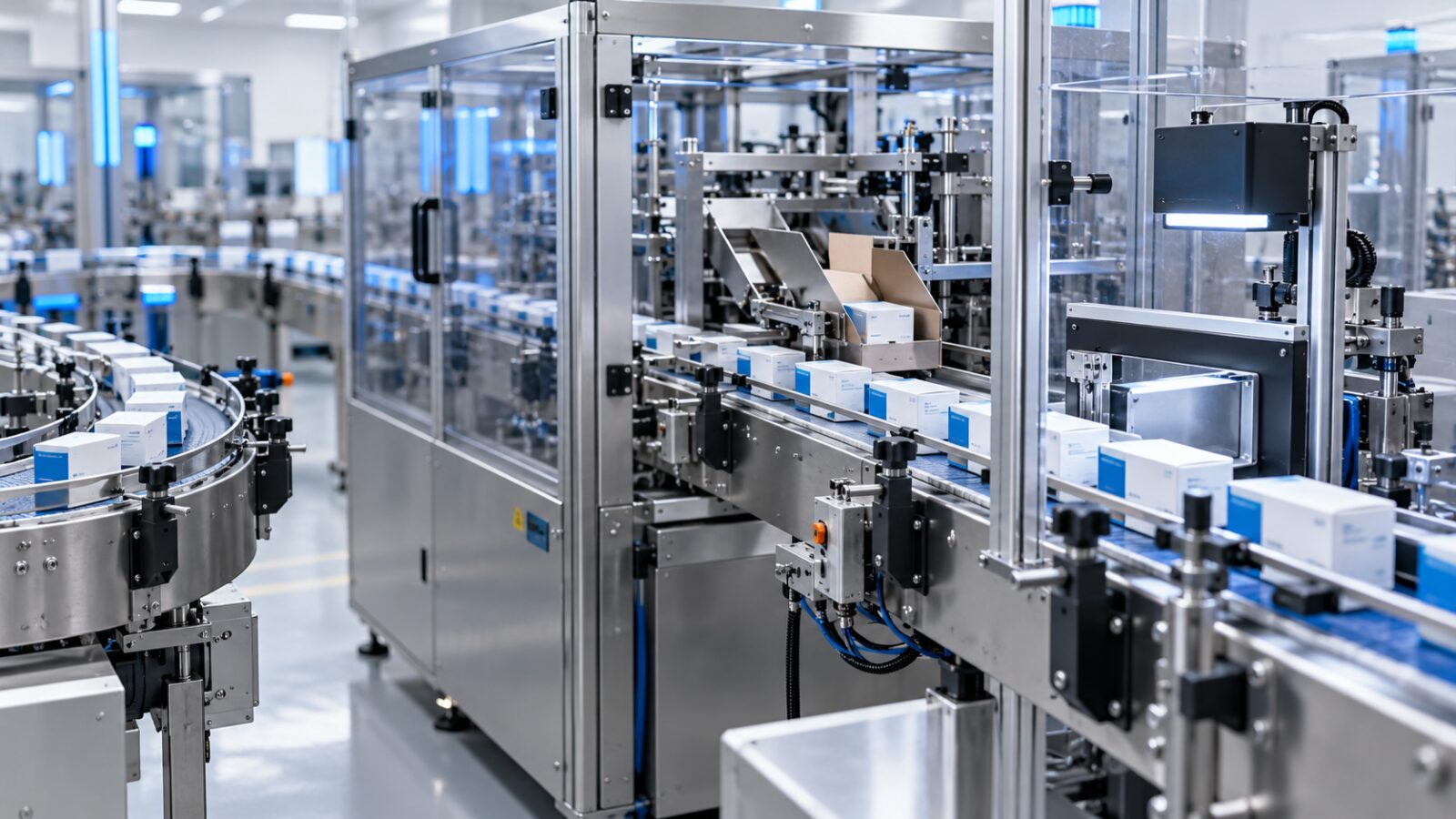
What does an AI line optimizer do?
The term describes a class of tools rather than one standard product. Depending on its data and configuration, a system may collect production information, identify recurring patterns and help a team investigate losses.
- Detect short, repeated interruptions from machine signals.
- Compare losses by machine, product, shift or time period.
- Rank recurring causes by frequency or lost production time.
- Compare planned and actual order progress.
- Bring production context into a review for supervisors and operators.
Reliable signals and production context matter. Incomplete machine events, product changes or shift records can lead an analysis to rank the wrong problem. Agree what counts as a stop, how the line records a product change and which measures the team will use.
El NIST roadmap on AI and machine learning for smart manufacturing identifies data management, integration with different sensing and control systems, and trustworthy operation among the challenges of industrial deployment.
How AI in manufacturing can support line efficiency
Find recurring short stops
Operators may clear a brief interruption before anyone records it. One event can look minor; repeated interruptions across a shift can take time from production. Machine data can show where and when the interruptions recur. AI-based analysis may help group patterns for investigation. Confirm the likely cause on the line before changing a setting, maintenance routine or work method.
Prioritize losses by impact
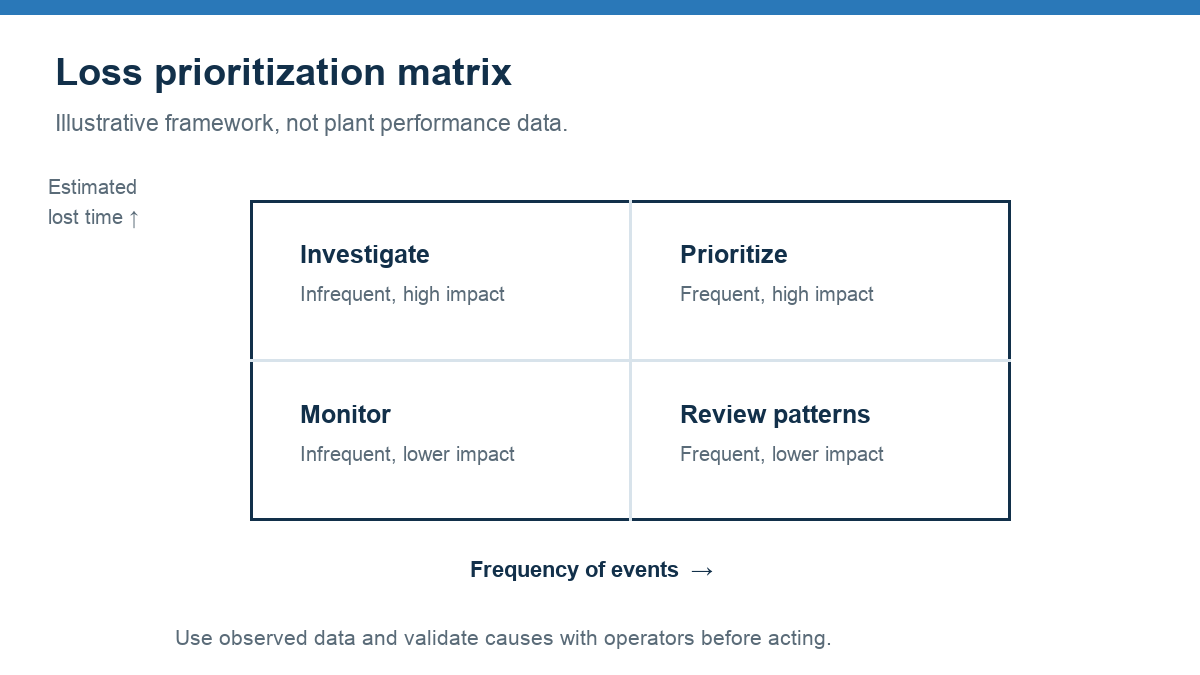
A list of stop events does not tell a team what to fix first. Rank causes using measures such as lost minutes, frequency and the machines affected. Compare a frequent small interruption with a less frequent but longer stop, then check the product and shift context before choosing an improvement.
Compare products and shifts with context
A line may run well for one product and struggle after a format change. A shift comparison can help a team investigate setup, materials, equipment and work instructions. Account for product mix, planned downtime, speed targets and quality requirements before drawing conclusions.
Connect findings to everyday work
A supervisor might identify a recurring stop, check the machine and order involved, then review a related maintenance request or work instruction. Dashboards and digital records can support that review when the relevant systems and workflows are connected.
A practical improvement loop
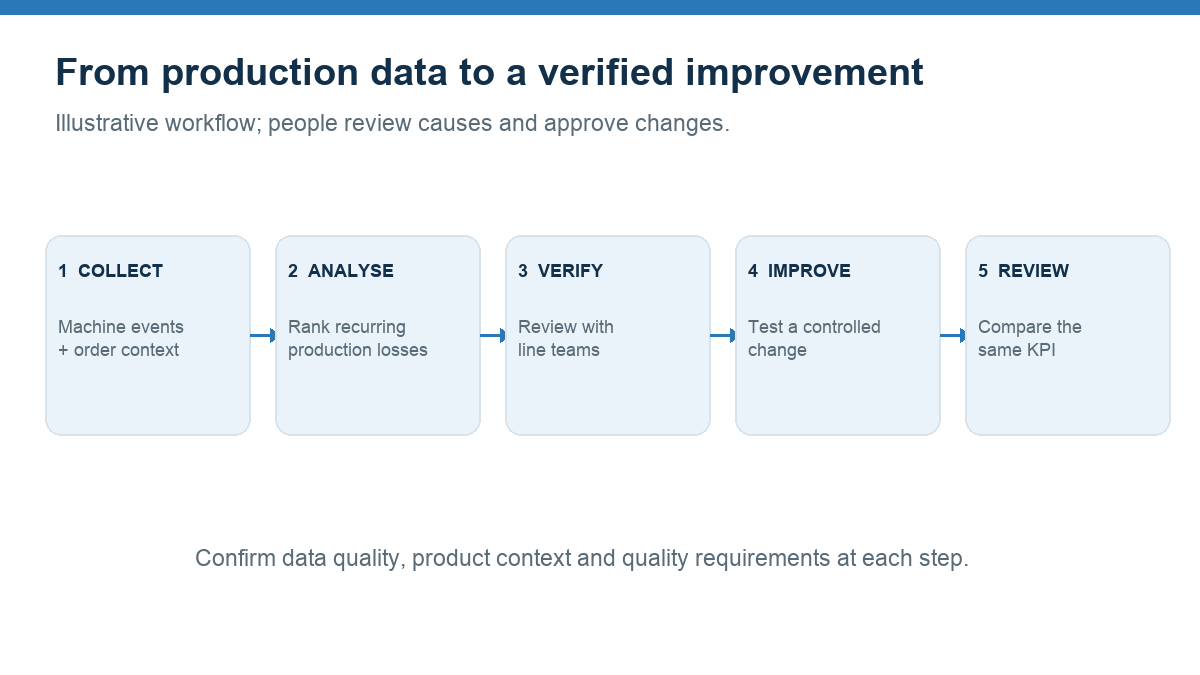
- Observe: collect machine events and the production context needed to interpret them.
- Rank: identify recurring losses and estimate their operational significance.
- Investigate: ask operators, maintenance and production teams to verify the likely cause.
- Test: agree on one controlled process or maintenance change.
- Verify: compare the same measure before and after the change, using comparable products and shifts.
- Standardize: update the work instruction or maintenance routine if the change works.
People remain responsible for validating causes, approving process changes and checking product quality and safety. A recommendation should lead to an investigation, not a change made without the site’s controls.
What to check before choosing an AI line optimizer
Ask vendors to demonstrate your own production scenarios. A pilot can answer questions that a feature list cannot:
- Can the system read signals from the machines on the target line?
- Can it distinguish planned stops from unplanned interruptions?
- Can users view results by machine, product and shift?
- Can they trace a recommendation back to its events and records?
- How does the system handle missing, delayed or duplicated data?
- Which changes require a person to review and approve them?
- Can the team compare the same KPI before and after an improvement?
- Which MES, OEE, ERP or maintenance workflows need to connect?
Start with one line and a specific operational question. Agree the baseline, data sources and success measure before the pilot. Measure any improvement at the plant before presenting it as a result.
Where Accevo fits
De Accevo OEE and Micro Stops Intelligence software captures machine data, detects microstops and helps teams analyze recurring losses. The Asistente de IA de Accevo provides conversational access to production information, including line status, order progress and OEE comparisons. The available workflow depends on the site’s systems and configuration.
For related methods, read the guide to packaging line OEE y MES integration for packaging lines.
Start with one measurable question
Choose a line with a recurring loss, confirm that the necessary data is available, and agree how the plant will measure progress. After testing an intervention, compare the same measure under comparable conditions. If the result supports the change, document it and decide whether it applies to another product, shift or line.
Want to investigate recurring stops or compare line performance? Explore Accevo’s OEE and production analytics.
